
Colour Theory: The Beauty of Magenta
You might wonder what’s so special about magenta – isn’t it just like any other colour?
Technically, that’s not true. The way we see colour doesn’t always match the physics of light. We only perceive colours between the wavelengths of red through to blue – the visible spectrum. Yet, magenta isn’t present in that spectrum. If you take a prism and refract white light, you get the familiar rainbow colours, but no magenta! So how can we see it?
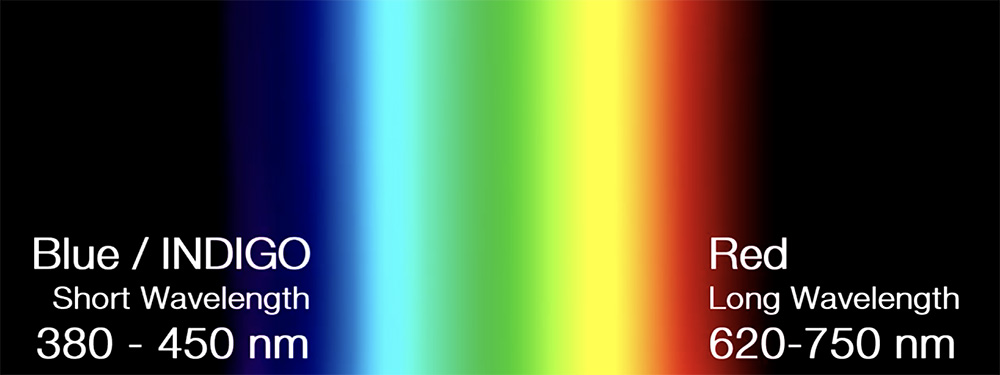
Our perception comes through three types of cone receptors in our eyes, sensitive to roughly low, medium, and high wavelengths. When light hits them, our brain interprets the signals. For example, yellow appears when medium and low (red) cones are stimulated together. Cyan sits between blue and green in the spectrum, activating the relevant cones to create that distinct sensation.
Magenta arises when high-wavelength (red) and short-wavelength (blue) light hit our eyes at the same time. The cones report red and blue activity, but there’s no green light present (which would sit in between).

Instead of forcing it into the middle of the spectrum, our brain creates a new colour: magenta. It’s a beautiful trick our visual system plays – mixing red and blue to produce something vivid and complete that doesn’t exist as a single wavelength.
Magenta is the colour that completes the colour wheel that I originally created in order to visualise this concept. You can download your own free copy of my colour wheel, which I created for artists, if you click on the image below:
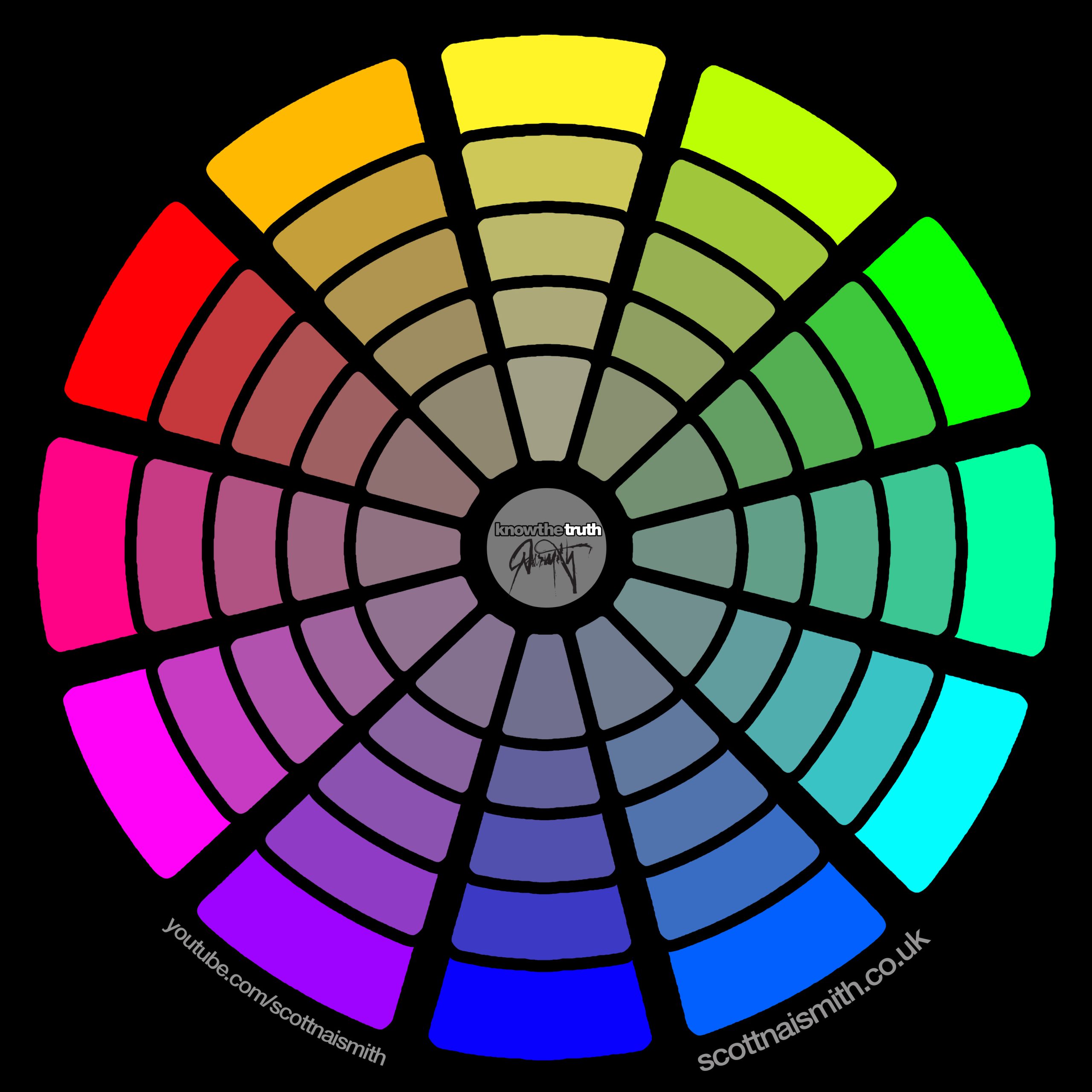
So, the regular spectral colours have corresponding wavelengths, but it is magenta that completes the circle.
Our brains treat light as a continuous wheel rather than a straight line from short to long wavelengths.
As painters, designers, or anyone working with colour, our allegiance is to the human eye – not to pure physics. We create for how people perceive and feel.
The real beauty of magenta is the reminder it gives us: all colour is constructed by our perception. It frees us to understand that when we paint or design, we aren’t strictly limited by “reality” or physics. We can push boundaries with imagination, which has no limits.
Full video below. Let me know in the comments what you think!